QuickBooks Balance Sheet Out of Balance: What It Means and How to Fix It Completely
- bellaisa99126
- Feb 26
- 5 min read

Picture this: You open QuickBooks, pull up the Balance Sheet, and something feels off. The numbers just don't add up. Sound familiar? If you've ever encountered a QuickBooks Balance Sheet Out of Balance, you know that sinking feeling all too well. It's one of those accounting nightmares that can send even seasoned bookkeepers into a mild panic.
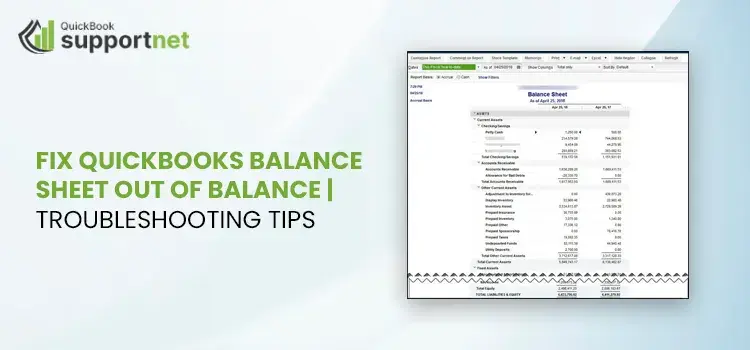
Is your QuickBooks Balance Sheet Out of Balance? Discover proven fixes, common causes & expert tips. Call our QuickBooks experts at +1(866)500-0076 for instant help!
But here's the thing — it happens more often than you'd think, and the good news is it's fixable. Whether you're running QuickBooks Desktop or QuickBooks Online, understanding why your balance sheet is out of balance is the first step toward restoring order to your financial records. Let's break it all down.
What Does "Balance Sheet Out of Balance" Actually Mean?
At its core, a balance sheet follows one golden rule:
Assets = Liabilities + Equity
When this equation holds true, your books are balanced. When it doesn't? That's when you get the dreaded out-of-balance error. In practical terms, this means QuickBooks is showing a discrepancy — total assets on one side don't match total liabilities and equity on the other.
This isn't just a cosmetic issue. An out-of-balance balance sheet can:
Misrepresent your company's financial health
Cause issues during tax preparation
Trigger errors in financial reports
Flag problems during audits or loan applications
Common Causes of QuickBooks Balance Sheet Out of Balance
Before diving into fixes, you need to understand what's causing the problem. Here are the most frequent culprits:
1. Data Damage or File Corruption
This is one of the most common reasons behind a QuickBooks Balance Sheet Out of Balance situation. Over time, QuickBooks data files can become corrupted, especially if the software crashed during a transaction or the file was improperly closed.
2. Multi-Currency Transactions
If your business deals with foreign currencies and you haven't properly set up the multi-currency feature, exchange rate discrepancies can throw your balance sheet off significantly.
3. Incorrect or Duplicate Journal Entries
A manually entered journal entry that doesn't properly debit and credit matching accounts can cause an imbalance. Duplicate entries are equally problematic.
4. Deleted or Modified Transactions
When users delete or modify transactions that were previously reconciled, it creates gaps in the accounting trail that can unbalance the sheet.
5. Improper Retained Earnings Handling
At year-end, QuickBooks automatically calculates retained earnings. If this process is interrupted or manually altered, the balance sheet can go haywire.
6. Issues with Opening Balances
If the opening balances were entered incorrectly when setting up the company file, the balance sheet will carry that error forward indefinitely.
How to Diagnose a QuickBooks Balance Sheet Out of Balance
Diagnosis comes before treatment. Here's how to pinpoint the issue:
Step 1: Run the Balance Sheet in Accrual vs. Cash Basis
Go to Reports > Company & Financial > Balance Sheet Standard
Toggle between Accrual and Cash basis
If it's out of balance in one but not the other, you likely have an issue with unpaid bills or invoices
Step 2: Check the Date Range
Narrow your date range progressively — start with the current year, then quarter, then month
The goal is to identify when the imbalance started
Step 3: Look for the Difference Amount
Note the exact dollar amount of the discrepancy
Search for transactions matching that amount — this can lead you straight to the problem
Step 4: Review Recent Changes
Check the Audit Trail (Reports > Accountant & Taxes > Audit Trail) for recent edits, deletions, or additions
How to Fix QuickBooks Balance Sheet Out of Balance
Once you've diagnosed the problem, it's time to fix it. Here are the most effective solutions:
Fix 1: Run the Rebuild Data Utility (QuickBooks Desktop)
This is your first line of defense against data damage:
Go to File > Utilities > Rebuild Data
QuickBooks will prompt you to back up the file — always do this
Let the rebuild complete (it may take a while for large files)
Once done, run Verify Data (File > Utilities > Verify Data) to check if the issue persists
Fix 2: Use the QuickBooks File Doctor
QuickBooks File Doctor is a built-in diagnostic tool designed to fix company file and network issues. Download it from Intuit's official website if it's not already installed, and run it against your company file.
Fix 3: Correct the Problematic Journal Entry
If a journal entry is the culprit:
Navigate to Company > Make General Journal Entries
Locate the entry causing the imbalance
Review and correct the debit/credit amounts
Ensure debits equal credits before saving
Fix 4: Address Multi-Currency Issues
Go to Edit > Preferences > Multiple Currencies
Ensure exchange rates are current and properly applied
Run the Multicurrency Revalue function if needed
Fix 5: Restore a Backup
If all else fails and you've identified the exact point of the imbalance, restoring a backup from before the issue occurred may be your cleanest option. This is why regular backups are non-negotiable.
Preventing Future Balance Sheet Imbalances
Prevention is always better than cure. Here's how to keep your balance sheet in check:
Back up your QuickBooks file regularly — at least weekly, if not daily
Limit user permissions to prevent unauthorized changes to historical transactions
Reconcile accounts monthly to catch discrepancies early
Avoid manual journal entries unless absolutely necessary and always double-check debits equal credits
Upgrade QuickBooks periodically to ensure you're running a stable, patched version
Review the Audit Trail regularly to monitor for unexpected changes
Conclusion
A QuickBooks Balance Sheet Out of Balance is disruptive — but it's not the end of the world. With the right diagnostic approach and the correct fixes applied, your balance sheet can be restored to its pristine, balanced state. From running the Rebuild Data utility to correcting errant journal entries, the solutions are well within reach.
The key is not to ignore it. An imbalance left unchecked will compound over time, making the eventual fix far more complex. Tackle it early, back up frequently, and when in doubt — call the pros at +1(866)500-0076.
Frequently Asked Questions
Q1: Why is my QuickBooks Balance Sheet showing different totals in Cash vs. Accrual basis?
A: This is typically caused by open invoices or unpaid bills. In accrual basis, these are recorded when the transaction occurs; in cash basis, only when payment is made. If the imbalance only shows in one mode, check your accounts receivable or payable for unlinked payments.
Q2: Can a QuickBooks update cause my balance sheet to go out of balance?
A: Rarely, but it can happen — especially if the update was interrupted or installed on a corrupted file. Always back up before installing updates.
Q3: How do I know if my QuickBooks data file is corrupted?
A: Run File > Utilities > Verify Data. QuickBooks will scan the file and report any integrity issues it finds.
Q4: Is it safe to use the Rebuild Data utility without a backup?
A: No. Always create a backup before running Rebuild Data. The utility itself will prompt you to do so — don't skip this step.
Q5: How long does it take for QuickBooks to rebuild data?
A: It depends on the size of your company file. Small files may take a few minutes; large, multi-year files can take 30 minutes or more.
Q6: My balance sheet has been out of balance for months. Is it too late to fix it?
A: It's never too late, but the longer you wait, the more complex the fix may be. Consider contacting a QuickBooks expert at +1(866)500-0076 for help untangling historical imbalances.
Q7: Can I fix a QuickBooks Balance Sheet Out of Balance issue in QuickBooks Online?
A: QuickBooks Online has fewer self-repair tools than the Desktop version. If you're on QBO and encountering this issue, it's best to contact Intuit support or a certified ProAdvisor directly.


Comments